
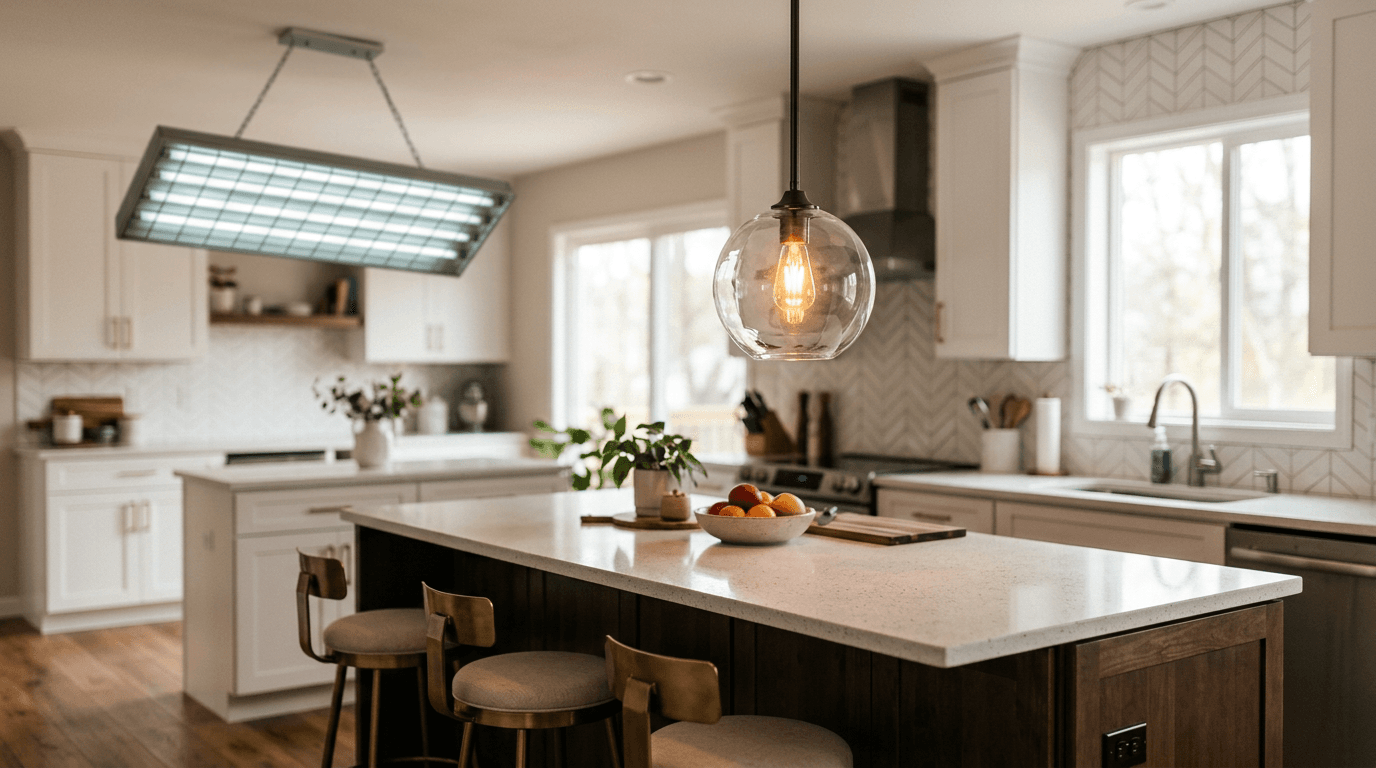
A flickering kitchen light, a chandelier with two dead sockets, a bathroom vanity bar that looks like it belongs in 1994 — every homeowner hits the same fork in the road. Is this a quick fix, or is it time for a new fixture?
Short answer: repair a light fixture when it works mechanically, you like the look, and the problem is a single failed part — a loose connection, a worn socket, a bad pull chain. Replace it when the fixture is corroded or cracked, badly dated, will not take modern LED bulbs, or has multiple failed components so repair costs approach the price of a new fixture. Below is exactly how to tell which situation you are in, plus 2026 costs in Rockland County.
When to Repair a Light Fixture
If the fixture is structurally sound and you are not trying to change the room's look, repair is almost always the cheaper, faster call. The most common fixture repairs are genuinely small jobs:
- Flickering from a loose wiring connection at the fixture or in the junction box
- A socket that will not hold a bulb — the brass tab inside has lost its tension or the socket has burned
- A broken pull chain on a closet light or ceiling fan light kit
- A dimmer that hums or buzzes because it is not rated for LED bulbs
- A fixture that drops or sags from a loose mounting screw or a tired crossbar
Most of these take well under an hour. A flickering fixture, in particular, is worth diagnosing quickly — flickering is sometimes harmless, but it can also signal a connection that is arcing and heating up, which is a fire concern. If several fixtures or a whole circuit flicker together, that points to a panel or circuit issue and is licensed-electrician territory in New York; see what a handyman can legally do in New York.
When to Replace a Light Fixture Instead
Replacement makes more sense in five situations:
- Visible corrosion or cracking. This is common in bathrooms and kitchens where moisture works on the metal and sockets. A corroded fixture is both an eyesore and a reliability problem.
- It is dated and you are updating the room. A fixture is one of the highest-impact, lowest-cost cosmetic upgrades in a room — see paint touch-ups vs. repainting a room for how it pairs with a refresh.
- It will not take modern LED bulbs. Some older enclosed fixtures trap heat and shorten LED life, and some old dimmers simply will not run LEDs smoothly.
- Multiple components have failed. When the sockets, the wiring, and the mounting are all tired, you are rebuilding the fixture — buy a new one.
- You are prepping to sell. Dated lighting reads as a neglected home. Our pre-sale handyman checklist covers why fixtures matter to buyers.
How to Choose a Replacement Fixture
A few measurements before you shop save a return trip:
- Footprint and ceiling pattern. Measure the existing fixture's base. A smaller new fixture leaves an un-painted ring of old paint or a visible patch where the original sat.
- Mounting style. Note whether it is a standard junction-box mount, a heavy chandelier needing a rated brace, or a flush ceiling mount.
- Bulb type and wattage rating. Confirm the new fixture's maximum wattage suits the room.
- Switch and dimmer compatibility. If the fixture is on a dimmer, buy LED-compatible bulbs and, if needed, an LED-rated dimmer.
If you are swapping a light for a ceiling fan, that is a different job with weight and electrical-box requirements — see what size ceiling fan you need.
The Installation Factor: Older Rockland County Homes
A straightforward fixture swap, where solid wiring and a proper junction box already exist, takes 30 to 60 minutes. But in older homes around Nyack, Piermont, and Tappan, we routinely find cloth-insulated wiring, no ground wire, undersized or non-rated boxes, and ceiling boxes buried under layers of plaster. None of that is a deal-breaker — it just means the job is not always the quick swap a YouTube video promises. A pro confirms the box is sound and the connections are safe before hanging anything.
How Much Does Light Fixture Work Cost in Rockland County?
Typical 2026 ranges from real Odds & Ends jobs. Full methodology is in our 2026 handyman pricing guide.
| Light fixture job | Typical 2026 price | Time on-site |
|---|---|---|
| Standard fixture swap (box and wiring exist) | $135–$225 | 0.5–1.0 hr |
| Repair (socket, pull chain, connection) | $115–$185 | 0.5–1.0 hr |
| Chandelier or heavy fixture (with rated brace) | $245–$425 | 2.0–3.0 hr |
| Bathroom vanity light replacement | $145–$245 | 1.0–1.5 hr |
| Dimmer switch replacement (LED-rated) | $95–$165 | 0.5 hr |
| Multiple fixtures, same visit | from $95 each | varies |
The cheapest way to update lighting is to bundle several fixtures into one visit — one trip, one setup, one cleanup. See how handyman pricing works.
Frequently Asked Questions
Is it worth repairing a light fixture or should I replace it?
Repair when the fixture works, you like its look, and only one part has failed — a socket, pull chain, or loose connection. Replace when it is corroded or cracked, badly dated, incompatible with LED bulbs, or has multiple failed parts so the repair cost approaches the price of a new fixture.
Why does my light fixture flicker?
A single flickering fixture is usually a loose wiring connection at the fixture or in the junction box, a worn socket, or an LED bulb on a dimmer not rated for LEDs. If several fixtures or a whole circuit flicker together, the cause is likely at the circuit or panel and needs a licensed electrician.
Can a handyman replace a light fixture?
Yes. Replacing a like-for-like fixture where a junction box and wiring already exist is standard handyman work in New York and does not require an electrician. New wiring runs, new circuits, or panel work do require a licensed electrician — see our light fixture installation service.
How much does it cost to replace a light fixture in Rockland County?
In 2026, a standard fixture swap typically runs $135–$225, a bathroom vanity light $145–$245, and a heavier chandelier needing a rated brace $245–$425. Bundling several fixtures into one visit lowers the per-fixture cost.
Do I need an electrician to install a chandelier?
Not usually. If the ceiling box is sound and a fan or fixture rated brace can be installed, a handyman can hang a chandelier. An electrician is needed only when new wiring, a new box location, or circuit work is involved.
Get an Honest Repair-or-Replace Answer
Not sure whether your fixture needs a quick repair or a full swap? Send a photo and request a free estimate, or call or text (908) 461-2688. We will tell you honestly which it is — and bundle the rest of your lighting list into the same visit. Odds & Ends has installed and repaired light fixtures across Rockland County since 2001.
Odds & Ends Handyman Service is a licensed Rockland County Home Improvement Contractor (#H-25-600), insured for $1,000,000, and in business since 2001 — serving the Town of Tuxedo, including Tuxedo Park, and all of Rockland County, NY.