
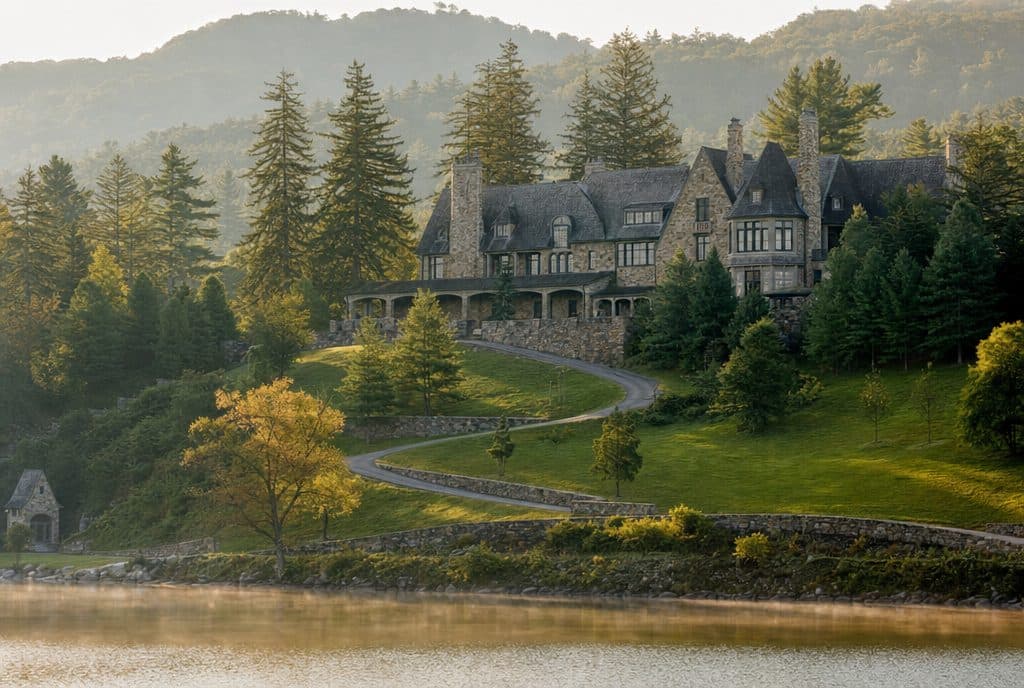
There's a moment I've come to expect when I walk through an older home in Tuxedo Park. The owner apologizes for the house. The hairline crack over the doorway, the window that needs a persuasive shoulder, the radiator that knocks like a downstairs neighbor. They apologize — for a house that has stood through every winter since before their great-grandparents were born.
Please stop apologizing. Your house isn't failing. It's asking for the one thing it's always needed: steady, small attention. After twenty-five years of working on old Hudson Valley homes, here's what I actually know about keeping one healthy.
How Much Maintenance Does an Older Home Really Need?
The old planning rule says set aside 1 to 2 percent of a home's value each year for maintenance, and for homes built before World War I, I'd plan the higher end. But the number matters less than the rhythm: an older home rewards many small interventions and punishes long stretches of neglect. A $300 caulk-and-flashing visit in October is how you avoid a $9,000 rot repair in a couple springs' time.
The homes in Tuxedo Park make the case better than I can. This colony was built starting in 1886, and some 300 of these houses still ring the lakes — stone, shingle, and stucco, plaster inside, slate overhead. They lasted 140 years because generations of owners kept up the small things. That's the whole secret. There isn't another one.
Should I Repair or Replace Original Materials?
Repair first, almost every time. This is the hill I'll die on, and it's also — quietly — the budget-friendly answer.
Plaster is the best example. Contractors who don't know plaster want to tear it out and hang drywall. But sound plaster is a better wall than drywall will ever be: harder, quieter, straighter in the ways that matter, and original to the house. Cracks and even sagging sections can be repaired, skimmed, and re-keyed for less than a demolition-and-drywall job once you price the mess honestly. I patch and skim plaster rather than condemning it, and the repair should disappear into the wall.
Original wood windows are the same story — a hundred-year-old sash of old-growth wood, re-glazed and weatherstripped with a good storm window, performs far better than the replacement industry wants you to believe, and it keeps the face of the house honest.
Trim and millwork: the profiles in these houses aren't at the lumber yard anymore, but they can be matched. When a repair needs new wood, matching the profile is the respect the house has earned. The same philosophy drives the built-ins we build for these homes — cabinetry that looks like it was always there, not like it arrived in a flat pack.
What Should I Watch Seasonally?
An older home in Tuxedo Park asks for four short check-ins a year — water and grading in spring, humidity in summer, gutters and heat in fall, ice at the roof edges in winter. Here's the maintenance calendar I'd put on any Tuxedo Park refrigerator:
- Spring — Walk the outside after the melt. Check grading and downspouts (water is the only real enemy these houses have), look for winter damage to caulk and paint, and get your basement humidity under control before summer arrives.
- Summer — The humid months are when basements in stone-foundation houses tell you the truth. A properly sized dehumidifier is the cheapest insurance in this town. It's also the season for exterior paint and deck work — wooded lots hold moisture, so surfaces need real drying windows.
- Fall — Gutters, gutters, gutters. The trees that make this valley beautiful will fill them twice before Thanksgiving. Seal gaps before heating season, and have the radiators and their shutoff valves looked at before the first cold night, not after.
- Winter — Watch for ice damming at the roof edges and keep an eye on rooms that run cold; both are usually air-sealing and insulation problems with affordable fixes.
Which Jobs Need a Specialist — and Which Need a Handyman?
An honest contractor tells you where his lane ends. Slate roofs and copper gutters belong to slate specialists — full stop. Boiler internals belong to your heating tech. Structural questions and major rewiring belong to engineers and licensed electricians, and I'll say so the moment a job crosses that line.
Everything below that line — the plaster, the trim, the doors and windows, the painting done with proper prep on old surfaces, the kitchens and bathrooms updated without erasing character, the basement humidity, the punch lists — that's the daily work of keeping an old house well, and it's exactly what we do.
A practical note for the Park specifically: register your contractor with the village and allow lead time for gate access on a first visit — I follow those procedures as a matter of course. Exterior changes typically go through the village's historic-district review, and the review exists for good reason; it's a large part of why the place still looks the way it does. Interior repairs and updates generally don't need it.
The Real Answer
What it really takes to maintain an older home in Tuxedo Park is not heroic money. It's a relationship — with the house, and with someone skilled who answers the phone for the small things, sees the water problem while it's still a stain, and respects the materials enough to repair them. These are some of the finest houses ever built in this country. They deserve a team that treats a sticking door as seriously as a renovation.
We'd like to be that team for yours. Call or text (908) 461-2688 or request a free estimate — and if you just want a walkthrough-and-honest-opinion visit before anything is wrong, that's a perfectly good reason to call too.
Odds & Ends Handyman Service is a licensed Rockland County Home Improvement Contractor (License #H-25-600, held by Daniel Kiely / Top Line Property Solutions LLC, d/b/a Odds and Ends Handyman Services) carrying $1,000,000 in general liability insurance. We serve the Town of Tuxedo — including Tuxedo Park, Eagle Valley, Southfields, and Sterling Forest — and all of Rockland County, NY.
Related