
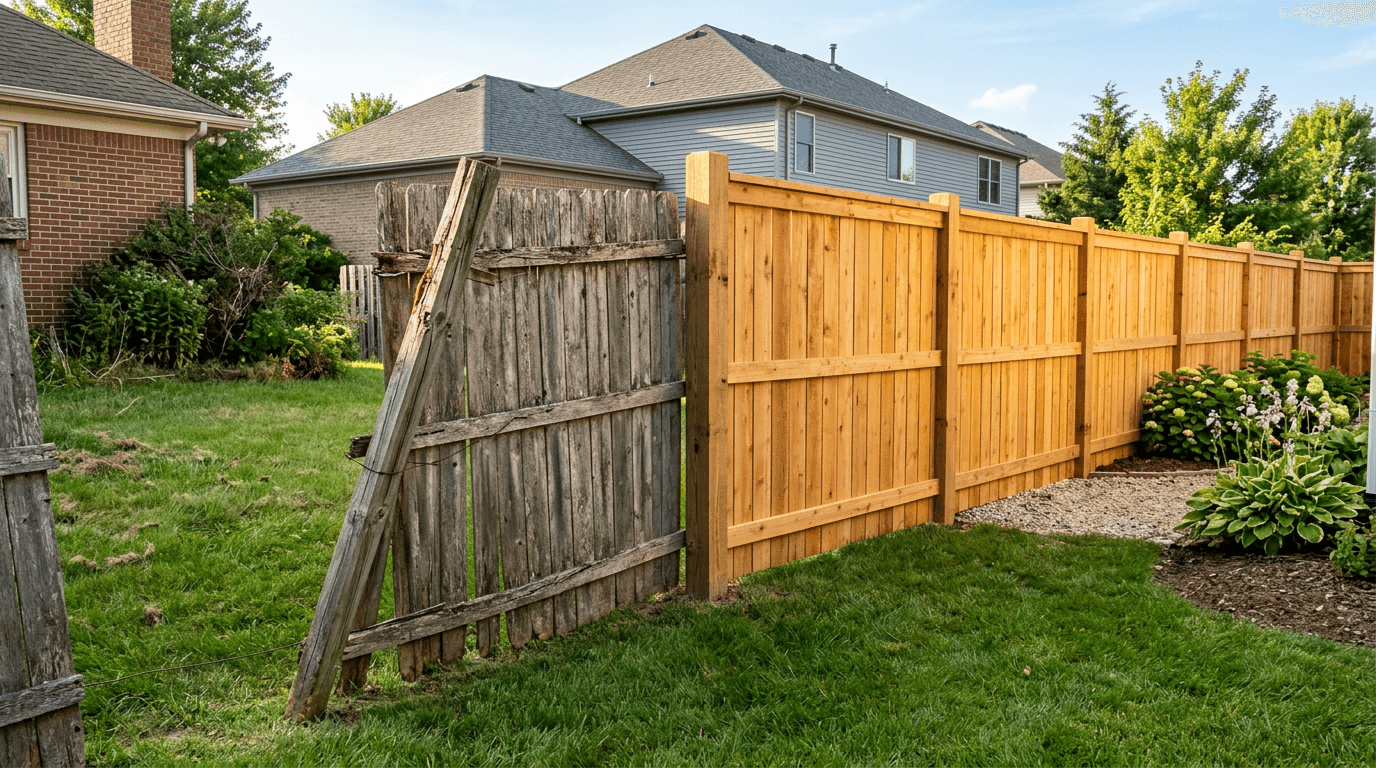
Rockland County fences take a beating. Between nor'easters, freeze-thaw cycles that heave posts out of the ground, and the wet summers that accelerate wood rot, even a well-built fence has a finite service life. The question most homeowners face is not whether their fence needs attention — it obviously does — but whether the right move is repair or full replacement. Quick answer: if fewer than one-third of your posts are rotted and the rails are structurally sound, repair almost always wins on cost. Once rot is widespread or the fence is more than 15–20 years old, replacement is usually more cost-effective in the long run.
Here is how to evaluate your fence and make the call you will not regret six months later.
How to Assess Your Fence Before Calling Anyone
Start with a methodical walk of the fence line. Bring a screwdriver and probe the base of every post at the soil line — this is where rot almost always begins. If the screwdriver sinks in easily, you have active rot. A post that looks weathered but resists probing is still sound. Also check:
- Rails: Grab each horizontal rail and apply downward force. Sound rails barely flex; failing ones deflect noticeably.
- Pickets/boards: Count damaged ones. A dozen warped pickets is a repair job. Half the fence is a different conversation.
- Gate operation: A gate that drags or will not latch is usually a hardware or post issue, not a reason to replace the whole fence.
- Overall lean: A section leaning more than a few degrees has a failing post. A fence that leans uniformly in the same direction may have been pushed by a storm and can sometimes be reset if the posts are otherwise sound.
This kind of honest inspection is what we do before recommending anything. It takes about 20 minutes and prevents you from spending money you do not need to spend — or, equally, putting money into a fence that is past its useful life.
When Repair Makes Sense
Repair is almost always the right answer when:
- Damage is isolated. A branch fell and broke five pickets. A gate post rotted but the other twenty posts are solid. A rail snapped during a heavy snow load. These are defined repairs with defined costs.
- Posts are sound. A leaning section does not automatically mean a bad post. If the post is structurally intact and has simply shifted, we can re-plumb it by digging out the base, resetting the post, and packing fresh concrete or compacted gravel. This commonly happens in Rockland County after a harsh winter where frost heave pushes posts upward.
- The fence is relatively young. A six- or seven-year-old fence with a few problem spots has a lot of useful life left. Repair now and it will serve you well for another decade.
- Gate hardware has failed. A sagging gate is one of the most common complaints we hear from homeowners in Nanuet, New City, and Pearl River. Nine times out of ten the fix is new hinges, a diagonal anti-sag brace, or a relocated strike. The fence posts and rails may be perfectly fine.
Minor Rot: A Nuanced Case
If rot is limited to the bottom few inches of one or two posts, a post mender (a metal sleeve that extends below the rotted section into fresh ground) can stabilize a post temporarily. We use these when a homeowner needs a fence functional through a season and replacement is planned for the next year. It is an honest short-term fix — not a permanent solution — and we will tell you that clearly.
When Replacement Is the Better Investment
There is a tipping point where further repair becomes a losing strategy:
- More than one-third of posts are rotted at or below grade. The posts are the foundation of the fence. Once a third of them are compromised, you are essentially rebuilding the structural core anyway — and the rails, pickets, and hardware you just paid to keep are now attached to a failing structure.
- The fence is 15–20+ years old with widespread deterioration. Gray, brittle wood; rails that flex or crack; pickets that split when you touch them — this is a fence that has given its service life. You can spend money patching it, or you can spend somewhat more money once and have a fence that will last another 15–20 years.
- Storm damage took out entire sections. When a storm drops a large section flat, the posts are often cracked at grade level or the concrete footings have failed. Matching new sections to old, weathered fence material is also difficult — the color and texture never quite align, and the result looks patched even if it is structurally sound.
- You are preparing to sell. A patched fence reads as deferred maintenance to buyers and inspectors. A new fence has genuine curb-appeal value and removes a negotiating point. If you are doing pre-sale work, see our post on common handyman jobs before selling a home.
Repair vs. Replacement Decision Matrix
| Condition | Recommended Action |
|---|---|
| 1–5 broken or warped pickets | Repair: straightforward swap |
| 1–2 rotted posts, rest sound | Repair: reset or sister the bad posts |
| Gate sagging, hardware worn | Repair: new hinges, brace, hardware |
| Leaning section, post is sound | Repair: re-plumb and compact |
| 30%+ of posts rotted at grade | Replace: foundation is compromised |
| Fence 15+ years, widespread gray rot | Replace: cost-effective long term |
| Multiple sections storm-damaged | Replace: matching old material is poor value |
| Pre-sale, fence visibly patched | Replace: better return than patching |
| Post mender on 1–2 posts | Short-term fix: plan replacement within 1–2 years |
Typical 2026 Cost Comparison in Rockland County
These are general estimates for handyman fence work, not a quote. For a number specific to your fence, request a free estimate. See also our full Rockland County handyman pricing guide.
| Job | Typical 2026 Range |
|---|---|
| Replace 5–10 pickets (labor + materials) | $175–$325 |
| Reset one leaning post (re-plumb, tamp) | $175–$275 |
| Replace one rotted post (dig, new post, concrete) | $275–$425 |
| Gate hardware replacement and adjustment | $125–$225 |
| Anti-sag gate brace installation | $95–$175 |
| Replace one damaged rail section | $125–$225 |
| Partial fence panel replacement (4–6 ft section) | $300–$550 |
These figures are general estimates, not a quote. Actual cost depends on fence style, post depth, soil conditions, and access. Full replacement costs vary significantly based on linear footage, material choice, and whether old fence removal is included.
How to Extend Your Fence's Life
Whether you just repaired or just replaced your fence, these habits add years to its life:
- Keep mulch and soil away from post bases. The most common cause of post rot is mulch piled against the base, trapping moisture. Maintain a clear zone of a few inches around each post.
- Trim vegetation. Ivy, vines, and shrubs growing on a fence trap moisture and accelerate rot. Keep them trimmed back.
- Fix damage promptly. A broken picket is a small repair today and a rot problem in two years if water gets into the rail.
- Apply a water-repellent sealer every two to three years if you have a raw wood fence. It will not last forever, but it substantially slows weathering.
- Inspect post bases every spring, especially after a freeze-thaw winter. Frost heave in Rockland County can push posts up noticeably over a single winter; catching it early means a re-set rather than a replacement.
For more on protecting your outdoor structures, see our deck repair warning signs post — the rot and moisture dynamics are essentially the same.
Frequently Asked Questions
How long should a wood fence last in Rockland County?
A pressure-treated wood fence installed correctly typically lasts 15–20 years in our climate. The freeze-thaw cycle and wet summers shorten that compared to drier climates. Regular maintenance — sealing, clearing vegetation, fixing minor damage promptly — can extend that meaningfully.
Can a handyman replace fence posts, or does that require a contractor?
Post replacement is standard handyman work: dig out the old post, set the new one plumb in concrete, let it cure, reattach the rails. We do this regularly across Rockland County. What a handyman can legally do in New York covers scope questions in more detail.
What type of fence holds up best to Rockland County winters?
Pressure-treated pine is the standard. Vinyl fencing avoids rot entirely but can become brittle and crack in very cold weather. Cedar is naturally rot-resistant and holds up well if maintained. Aluminum is low-maintenance for ornamental applications. We work with whatever material you have or prefer.
My gate will not close properly. Is that a fence problem or a gate problem?
Usually it is the gate — worn hinges, a post that has rotated slightly, or a latch that needs adjustment. In most cases this is a repair rather than a fence-wide issue. We assess the post first (probe it for rot at grade) and go from there.
How much does it cost to replace an entire wood fence in Rockland County?
Full replacement costs vary too much by fence length, height, material, and whether we are hauling the old fence away to give a meaningful range here. Get a site visit — we will walk the fence, assess every post, and give you an honest written estimate. Contact us or request an estimate online.
Get an Honest Fence Assessment
We check every post for rot, test every rail for flex, and tell you exactly what the fence needs — nothing more. Call or text (908) 461-2688 or request a free estimate. We serve all of Rockland County, including New City, Nanuet, Stony Point, Haverstraw, Suffern, Pearl River, Spring Valley, and beyond.
Odds & Ends Handyman Service is a licensed Rockland County Home Improvement Contractor (#H-25-600), insured for $1,000,000, and in business since 2001 — serving the Town of Tuxedo, including Tuxedo Park, and all of Rockland County, NY.